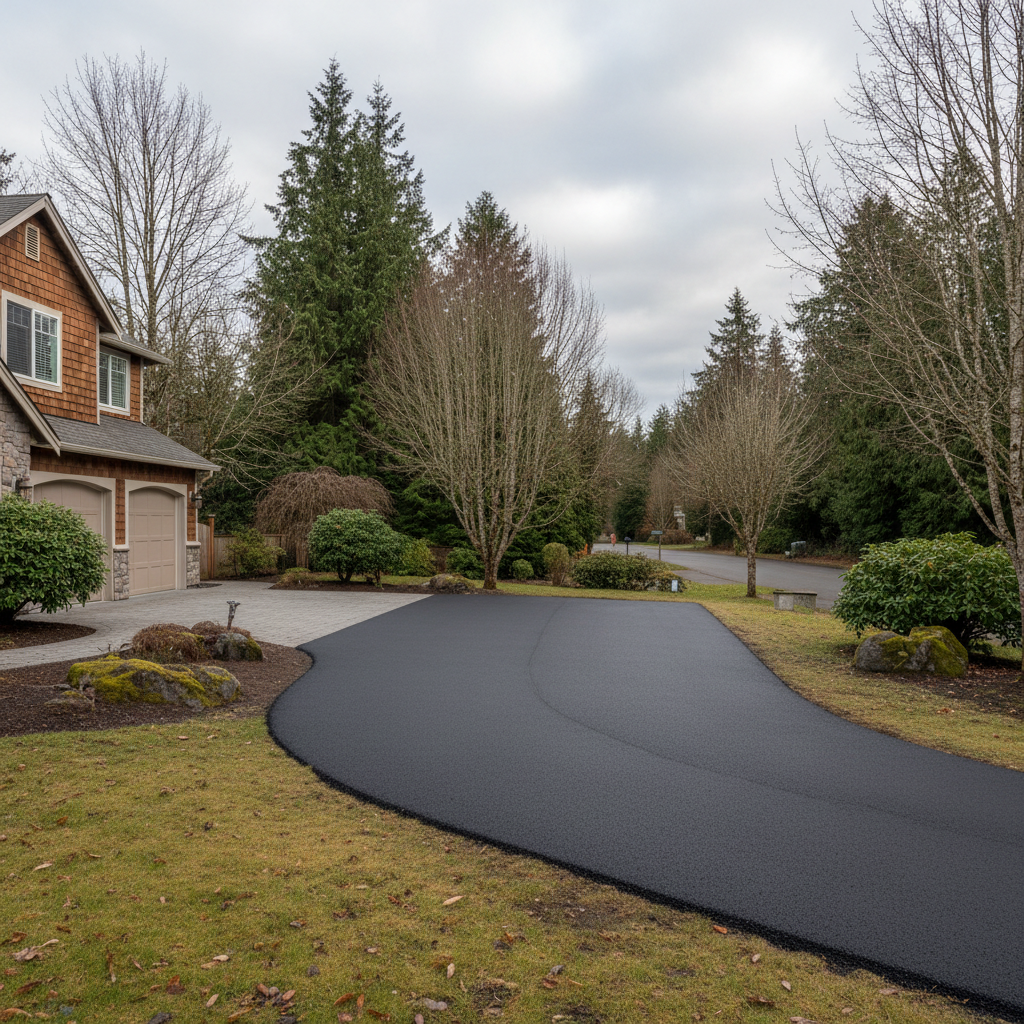
You're probably wondering when the best time is to get that driveway fixed or repaved. It's not just about when you've got the cash; it's about making sure the work lasts, and that comes down to timing, especially here in Everett.
The Everett Weather Factor: It's All About Temperature and Moisture
Here in the Pacific Northwest, our weather's a bit different than, say, Arizona. We don't get those scorching summers for months on end, and we definitely get our fair share of rain. That matters a lot when you're talking about asphalt.
Asphalt needs specific conditions to cure properly. Think of it like baking a cake – you can't just throw it in the oven at any temperature and expect it to come out right. For asphalt, the sweet spot is generally when temperatures are consistently above 50 degrees Fahrenheit, both during the day and at night. Why? Because the asphalt emulsion, which is the binder that holds everything together, needs that warmth to set up and bond correctly. If it's too cold, it won't cure well, leaving you with a weaker, less durable surface that's more prone to cracking and deterioration down the line. And who wants that?
Moisture is the other big one. We get plenty of it. You can't pave on a wet subgrade. If the ground underneath is saturated, you're just laying asphalt on a squishy foundation, and that's a recipe for failure. It'll lead to potholes, cracking, and an overall shorter lifespan for your driveway. We need dry conditions, not just for the day of paving, but for the days leading up to it, so the ground has a chance to dry out properly. This is especially true if we're doing any significant excavation or base work.
When to Schedule: The Prime Paving Season
Given our climate, the prime paving season in Everett usually kicks off in late spring and runs through early fall. I'm talking roughly May through September, sometimes into October if we get a nice, dry stretch. That's when you're most likely to hit those consistent 50+ degree days and get a good run of dry weather.
- Late Spring (May-June): This is a great window. The ground has had a chance to dry out from the winter rains, and temperatures are reliably climbing. It's often less busy than mid-summer, too, so you might have more flexibility with scheduling.
- Summer (July-August): This is peak season for a reason. It's usually our driest and warmest period. Ideal conditions for new installations and major repairs. Just be aware that everyone else is thinking the same thing, so contractors like us at Valley Asphalt Solutions get booked up fast. If you're thinking about summer work, call us early.
- Early Fall (September-October): Still a good option, but you're starting to play a bit of a gamble with the weather. We can get some beautiful, dry, warm days, but the chances of rain increase, and nighttime temperatures start to drop. If we get a cold snap or a week of rain, we might have to reschedule.
Trying to pave in the dead of winter or during our really wet spring months? Forget about it. It's just not going to hold up. Any contractor worth their salt won't even attempt it because they know it'll be a callback waiting to happen.
Protecting Your Investment Year-Round: Beyond the Paving Day
Getting your driveway paved at the right time is just the first step. To make sure it lasts, you've got to take care of it. Here's what I tell folks:
- Give it Time to Cure: After we lay down new asphalt, it needs time. Stay off it for at least 24-48 hours, and sometimes longer for heavier vehicles. It's still soft and curing. Turning your wheels sharply on it too soon can leave permanent marks.
- Sealcoating: This is huge, especially with our Everett weather. Sealcoating every 2-3 years protects your asphalt from UV rays, water penetration, and oil spills. It's like sunscreen and a rain jacket for your driveway. It keeps the asphalt flexible and prevents those tiny cracks from turning into big problems.
- Address Cracks Early: See a crack? Don't ignore it. Water gets into those cracks, freezes, expands, and then you've got a pothole. Filling cracks promptly with the right material is a simple, cost-effective way to extend your driveway's life.
- Drainage Matters: Make sure water isn't pooling on your driveway. If you've got areas where water sits, especially common in some of the older homes up around the Port Gardner neighborhood where drainage wasn't always a top priority, that's going to cause issues. Good drainage is key to preventing premature wear and tear.
- Keep it Clean: Sweep off debris, leaves, and dirt regularly. This prevents organic matter from breaking down on the surface and holding moisture, which can degrade the asphalt.
Your driveway is a big investment. Doing it right the first time, at the right time, and then taking care of it, will save you a lot of headaches and money down the road. If you've got questions about your specific project or when to get started, just give us a call. We're happy to talk through it.