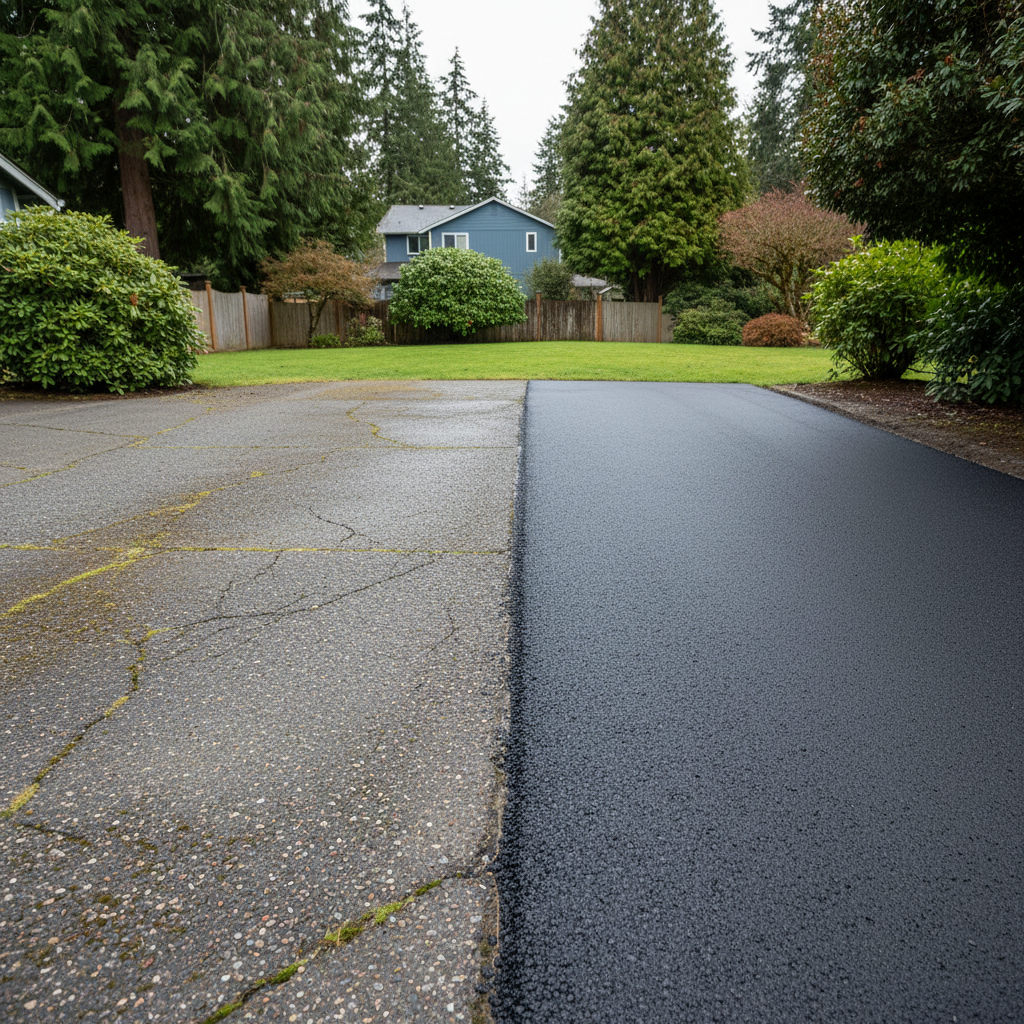
So, you're thinking about a new driveway or maybe replacing an old one. The big question always pops up, doesn't it? Asphalt or concrete? It's not just about how it looks; it's really about what makes sense for your wallet, your time, and how long you expect it to last—especially here in Everett.
I've seen countless driveways come and go over the years, and honestly, both materials have their place. But for a homeowner, particularly around here with our soggy winters and those occasional freezes, one usually comes out ahead. Let's break it down, shall we?
Initial Cost: The Sticker Shock Factor
Right off the bat, asphalt almost always costs less to install than concrete. We're talking a pretty big difference, sometimes 30-50% less per square foot. This happens because the materials themselves are cheaper, and the installation often goes quicker. If you're on a tight budget but still need a good, functional driveway, asphalt is usually the winner here.
Concrete, on the other hand, takes more time, more labor, and the material itself costs more. So, if your main concern is just how much you're spending upfront, asphalt will definitely save you a chunk of change.
Durability & Longevity: Built to Last?
Now, this is where things get interesting, and where our local conditions really matter. A well-installed asphalt driveway, if you keep up with its maintenance, can easily last 20-30 years. It's flexible, which is a huge plus. When the ground shifts a bit, or we get those freeze-thaw cycles that can be brutal on surfaces, asphalt tends to move right along with it. This means it's less likely to crack from ground movement or frost heave, which is a real worry in some of the older, less stable soil areas around Everett—think those hillside properties overlooking Port Gardner Bay.
Concrete, conversely, is rigid. It's tough, absolutely, but when it cracks, it cracks. And those cracks are usually permanent and much harder to fix so they blend in. While concrete can stick around for 30-40 years or even longer, those little hairline cracks can quickly turn into bigger problems, especially if water gets in and freezes. Over time, you'll also start seeing spalling and pitting, thanks to our constant moisture and the occasional de-icing salts.
Maintenance: What's Your Time Worth?
For homeowners, this is probably the biggest difference. Asphalt needs regular maintenance. You'll want to sealcoat it every 2-5 years, depending on how much traffic it gets and how much sun it sees. This isn't just about making it look good; it actually protects the asphalt from UV rays, water seeping in, and oil spills, which really extends its life. It's a fairly inexpensive process, and if you stay on top of it, your driveway will look sharp and last a long, long time. Small cracks? You can fill those easily before they become major headaches.
Concrete is often touted as