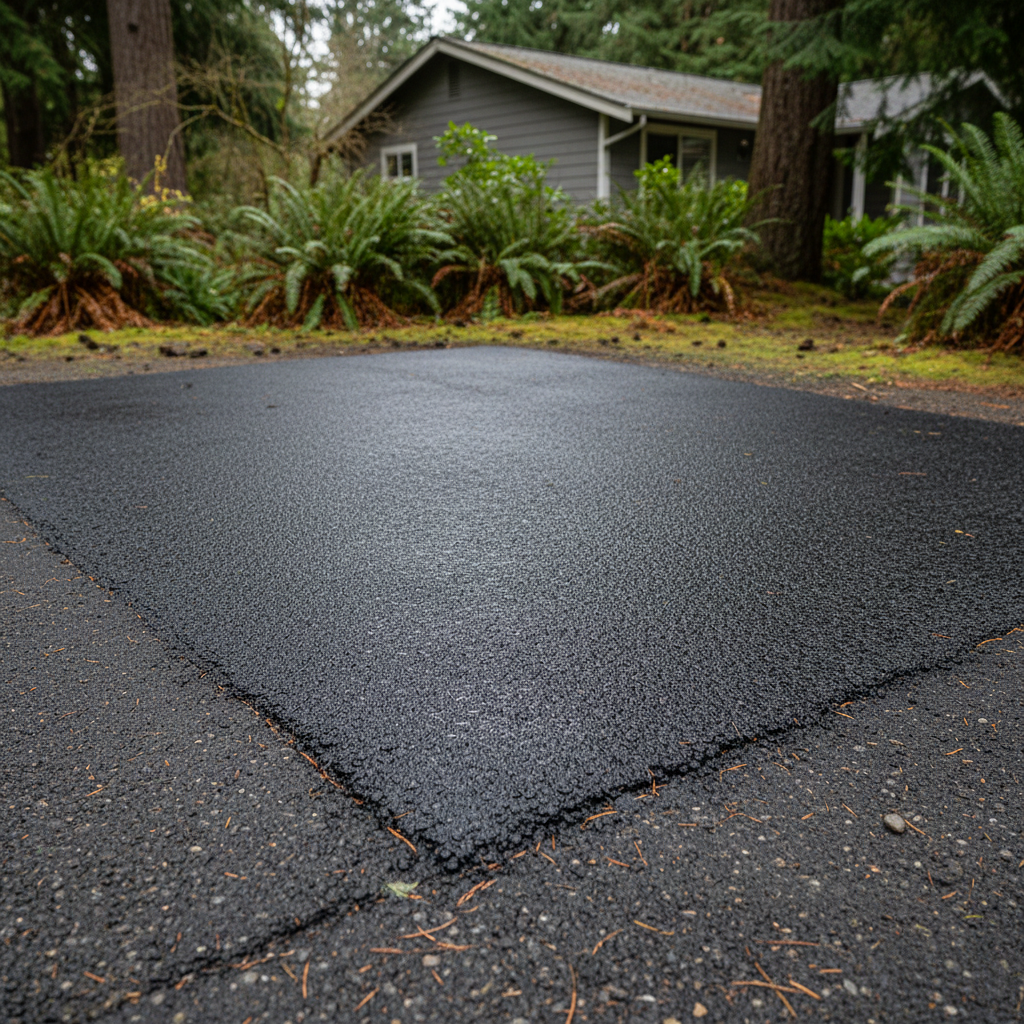
How do I know if my driveway needs a patch, an overlay, or a complete replacement?
Every chunk of pavement tells a story, and the depth of the damage usually makes the decision for you. If you are dealing with a few isolated cracks or a single localized depression, a targeted patch or fill will do the trick. But when the cracks start webbing together into an alligator pattern across large sections, you are looking at structural failure in the base rock underneath. Around Everett, WA, our wet Pacific Northwest winters and clay-heavy soils love to compromise subbases. If more than thirty percent of your surface is failing, patching is just throwing good money after bad. That is when you need to weigh an overlay against a total tear-out and repave.
Why does water pool on my asphalt after it rains?
Standing water is public enemy number one for blacktop. If you notice puddles lingering hours after a storm rolls through the Cascade foothills, your subgrade has likely settled unevenly or your original grading was off. Asphalt is not meant to hold water. When moisture sits in those low spots, it slowly softens the binder holding the aggregate together. Give it enough freeze-thaw cycles during cold snaps, and those wet spots turn straight into crumbling potholes. Minor birdbaths can sometimes be leveled with a surface patch, but chronic drainage issues usually require milling or re-sloping.
Can I fill asphalt cracks myself, or should I call a professional?
You can definitely handle minor maintenance over a weekend if you have some basic tools and a hot-pour or cold-pour product from the hardware store. Cleaning out weeds, blowing out debris with compressed air, and sealing hairline cracks will keep water from seeping down into your base. However, DIY kits struggle with larger structural splits or wide gaps. If a crack is wider than half an inch or showing movement, pouring store-bought liquid into it is basically a band-aid on a broken bone. Valley Asphalt Solutions sees plenty of DIY fixes that fail after a single winter because the underlying void was not properly cleaned, torched, or backed.
How long do I need to keep cars off freshly repaired asphalt?
Patience is everything when letting new mix set up. For a standard hot-mix patch, you want to keep passenger vehicles off the area for at least twenty-four to forty-eight hours, depending on how warm and dry the air is. If it is a humid, overcast morning in an Everett neighborhood shaded by Douglas firs, everything takes longer to harden. Driving or turning your wheels sharply on a fresh patch too soon will twist the aggregate and leave permanent depressions. Give it a few days of gentle use before parking heavy trucks or RVs on any newly worked section.
Why are the edges of my driveway crumbling away?
Driveway edges take a beating because they lack lateral support. If you do not have a concrete border, grass and soil push against the sides, and cars straying slightly off the pavement crush the unsupported shoulder. Heavy delivery trucks backing down your drive are usually the final straw. Once the edge breaks off, water gets underneath the remaining asphalt and accelerates the damage inward. Fixing this usually means cutting back the broken edge, rebuilding the crushed gravel base on the side, and patching a clean, reinforced margin.
How often should I realistically expect to repair my asphalt?
There is no magic number, but a well-constructed driveway in our regional climate usually needs minor crack sealing every three to five years to keep moisture out. If you stay on top of small maintenance items as they pop up, you can easily stretch the overall life of your pavement to twenty years or more before needing major structural work. Neglect it for five years, and nature will quickly catch up. Valley Asphalt Solutions always tells homeowners that proactive maintenance is infinitely cheaper than major surgery down the road.